

Get your taste buds ready to be wowed with this versatile condiment!
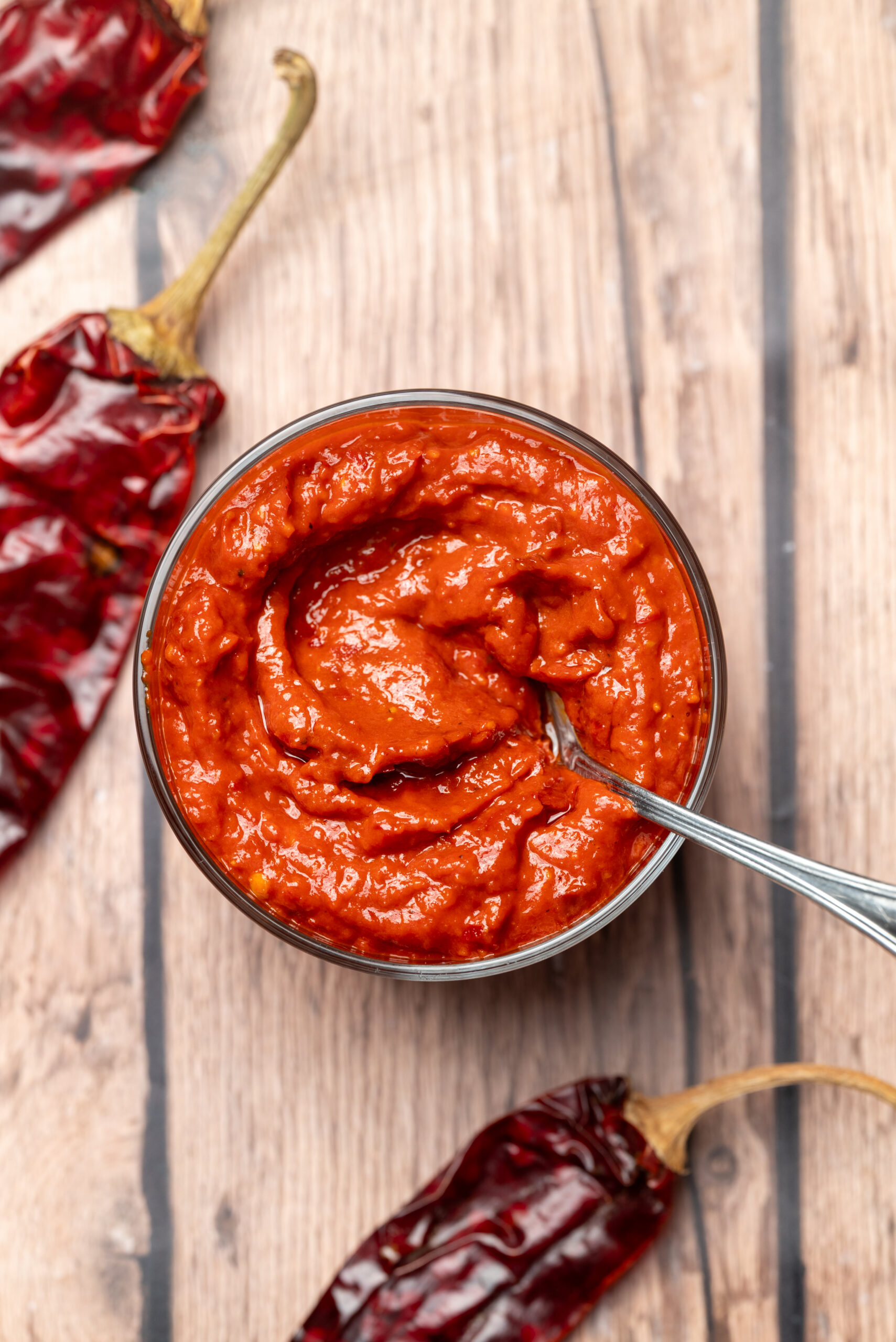
So many wonderful foods come to us from North Africa and the Mediterranean. I find myself gravitating more and more towards condiments that can do double duty, enhancing the flavors of other dishes as they cook. One such recipe is for homemade harissa, a slightly spicy, tangy, smoky yet sweet paste made with dried chiles, roasted red peppers, garlic, lemon juice, tomato paste, and a host of savory spices that bring it to life.
With its complex flavors, this bright red paste will astound you. While you can buy harissa at the grocery store, I highly recommend making it at home. Nothing beats the fresh flavor of homemade sauces. Besides, you get to control the heat level when making it from scratch. That can be beneficial when serving it to children.
So, let’s talk about which chiles to use when making harissa. Here in the US, you are more likely to find New Mexican chiles from Hatch Valley or Guajillo chiles from Mexico. Now, if you want to minimize the heat, go with Guajillo chiles with their fruity, sweet flavor profile. The more earthy New Mexico chiles can range from mild to extra hot, depending on the variety. If you want the most authentic flavor, look for Tunisian Baklouti peppers, but they might be hard to find in the US. With their sweet, fruity flavor and mellow heat, you might want to use Guajillo chiles for the closest match.
Why do you add olive oil slowly to the food processor?
I fondly remember the first time I made a recipe that called for me to add olive oil to a food processor or blender (either will work in this recipe) slowly, while it was running. It was for a sauce used in one of my favorite restaurant recipes from the late 1990s to the early 2000s. I had never made an emulsion before—that’s what you call it when drizzling the olive oil into the blender. It breaks the oil into tiny droplets, dispersing them throughout the liquid to create a smooth, thick, creamy texture. If you add the oil too fast, you get large oily blobs that lead to a watery or broken sauce. Trust me, you don’t want this to happen with this homemade harissa.
You need an emulsifier to help the olive oil form a proper emulsion. Depending on the recipe, ingredients such as garlic paste, honey, egg yolks, mustard, and tomato paste can be used. In this case, we have the garlic and tomato paste to do the work. Blending all non-oil ingredients into a good paste-like consistency before adding the oil is crucial. If your oil bottle has a large opening, I recommend using a funnel or decorating bottle to control the flow of oil into the blender. You can also use a high-quality immersion blender, slowly feeding the oil into the container. Remember to give the oil time to emulsify gradually. It may seem like a slow process, but the results will pay off in the end.
How do I store leftovers?
Refrigerate your homemade harissa in a jar with a tight lid. Remember to add a little olive oil over the top before closing the jar. Olive oil helps maintain the freshness of the harissa in the refrigerator for up to 3 weeks. Add more olive oil to the top each time you use the paste to ensure it stays fresh. You can also freeze the harissa in freezer-safe containers—I recommend in small portions topped with olive oil—for up to 3 months. Defrost it in the fridge for use as a condiment, or you can use it straight from the freezer when adding it to other recipes.
Serving suggestions
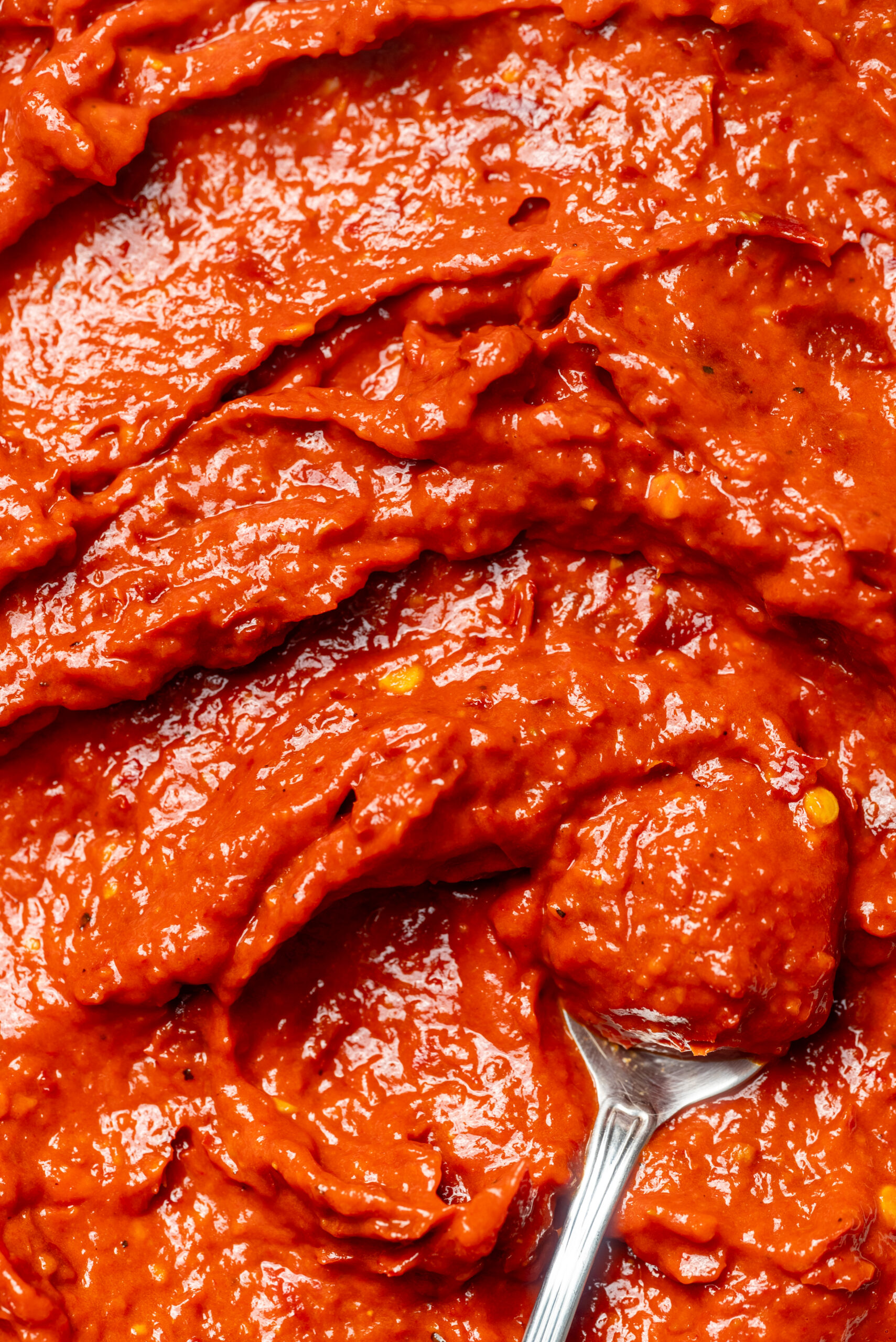
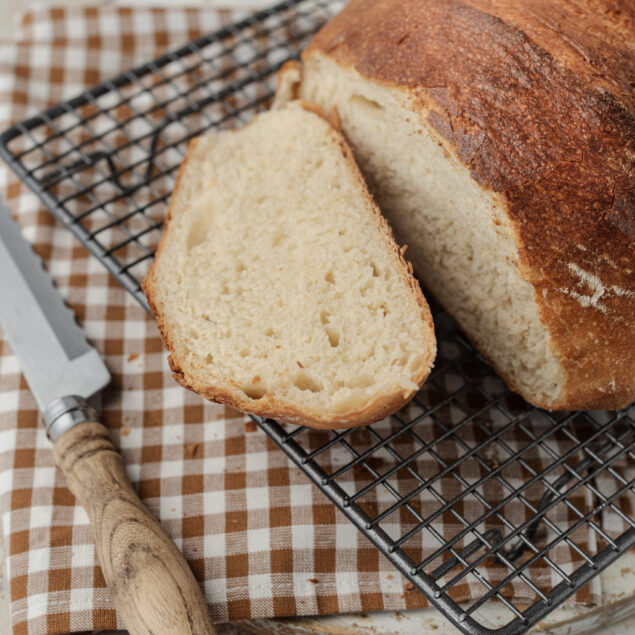
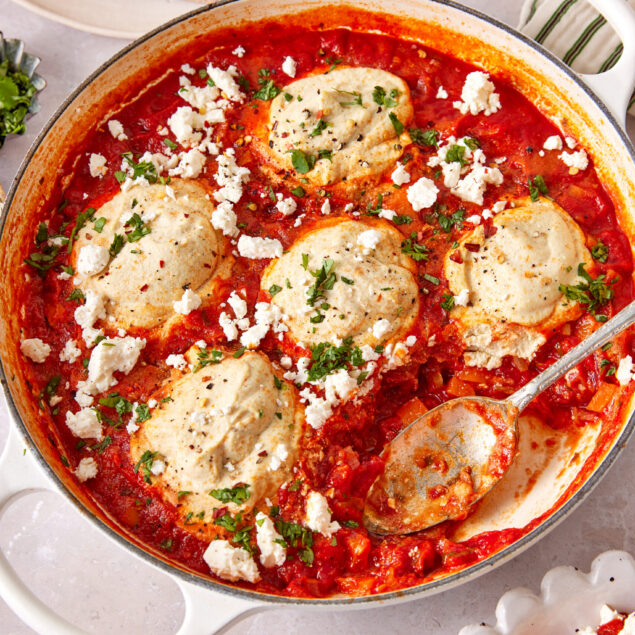
Homemade harissa has many uses, both as a condiment and in other recipes. It makes a delicious addition to a charcuterie board or as a tasty spread for this Olive Bread Recipe. Serve it on the side with this Shakshuka Recipe or Eggs In Purgatory, or add it to the sauce while cooking. And, speaking of eggs, add a dollop to Scrambled Eggs With Spinach or this Avocado Deviled Eggs Recipe. Give an extra kick to Lentil Sloppy Joes (Vegan) by adding a spoonful to the mix. Or give your Homemade Tomato-Basil Soup Recipe a bit of North African zing by stirring in some harissa.
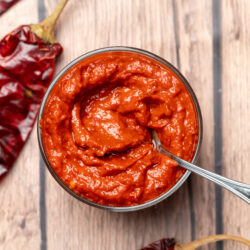
Homemade Harissa
Ingredients
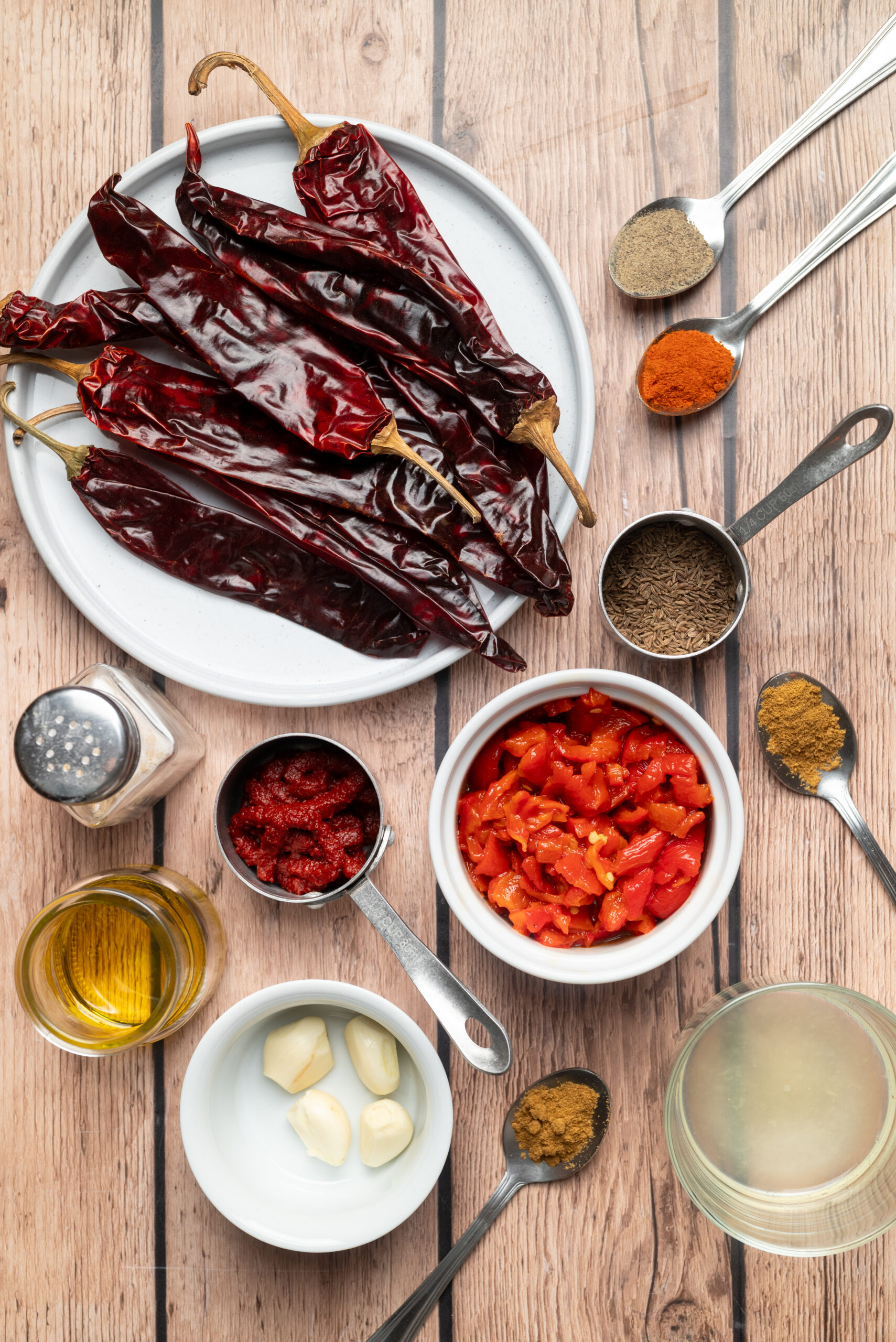
- 7 dried chiles New Mexico or Guajillo
- 3/4 teaspoon caraway seeds
- 6 ounces roasted red peppers drained and roughly chopped
- 2 tablespoons tomato paste
- 4 garlic cloves peeled
- 2 teaspoons ground coriander
- 1 3/4 teaspoons ground cumin
- 1 teaspoon smoked paprika
- 1/2 teaspoon cayenne pepper
- 1 pinch black pepper
- Kosher salt to taste
- 2 tablespoons fresh lemon juice
- 2 tablespoons extra-virgin olive oil plus extra for topping
Instructions
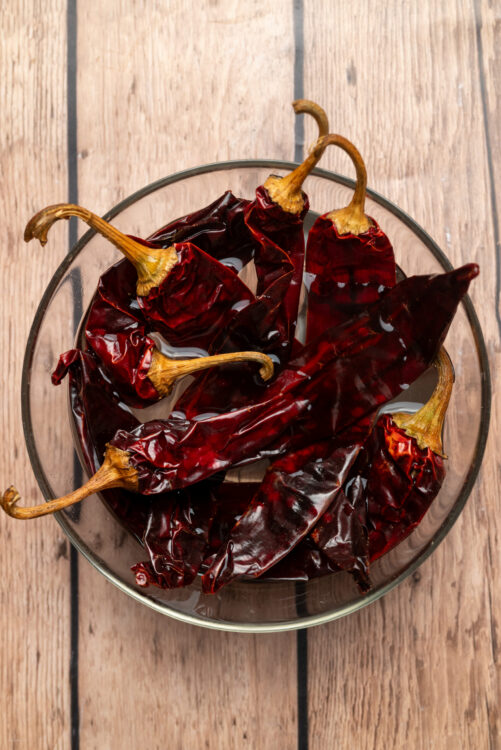
- Place the dried chiles in a heat-safe bowl and cover with hot water. Let them soak for 30 minutes until soft. Drain the water and remove stems and seeds.
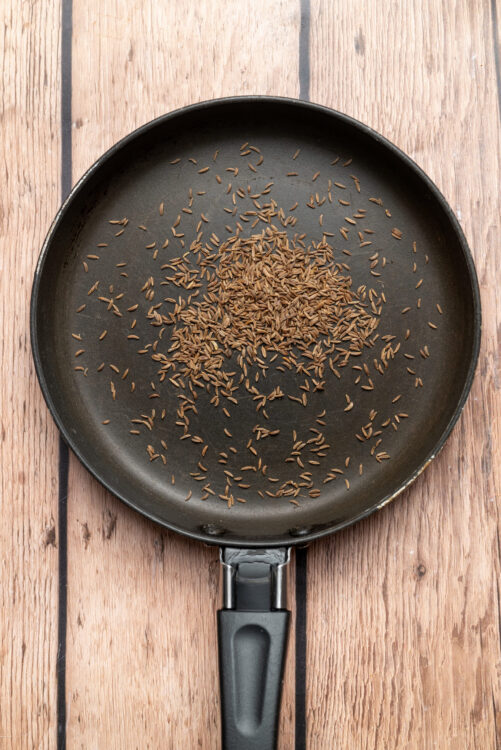
- In a small dry skillet, toast the caraway seeds over medium heat until fragrant. Then, if needed, use a spice grinder to crush them into a fine powder.
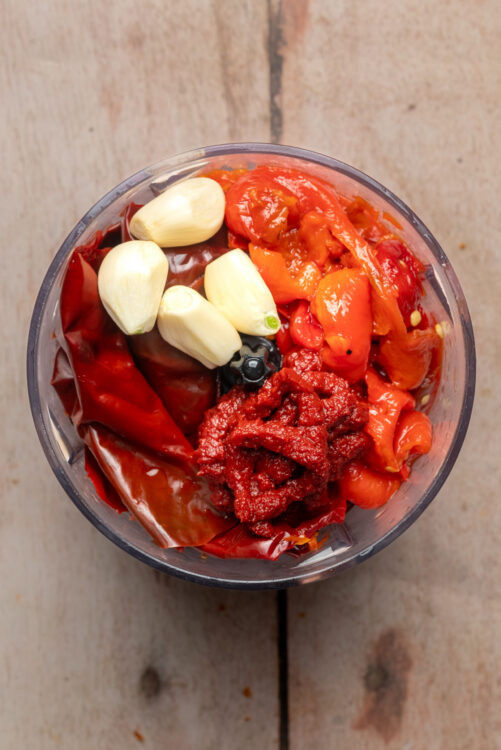
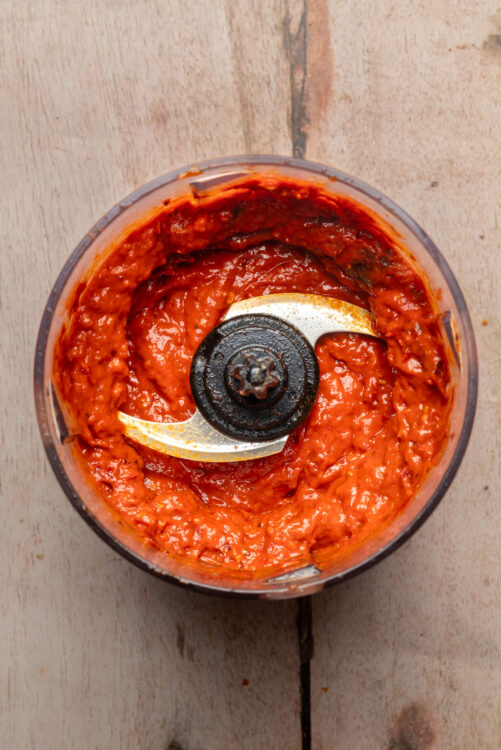
- In a food processor, combine the rehydrated chiles, roasted red peppers, tomato paste, garlic, toasted caraway, ground coriander, cumin, smoked paprika, cayenne pepper, and a pinch of black pepper and kosher salt. Add lemon juice.
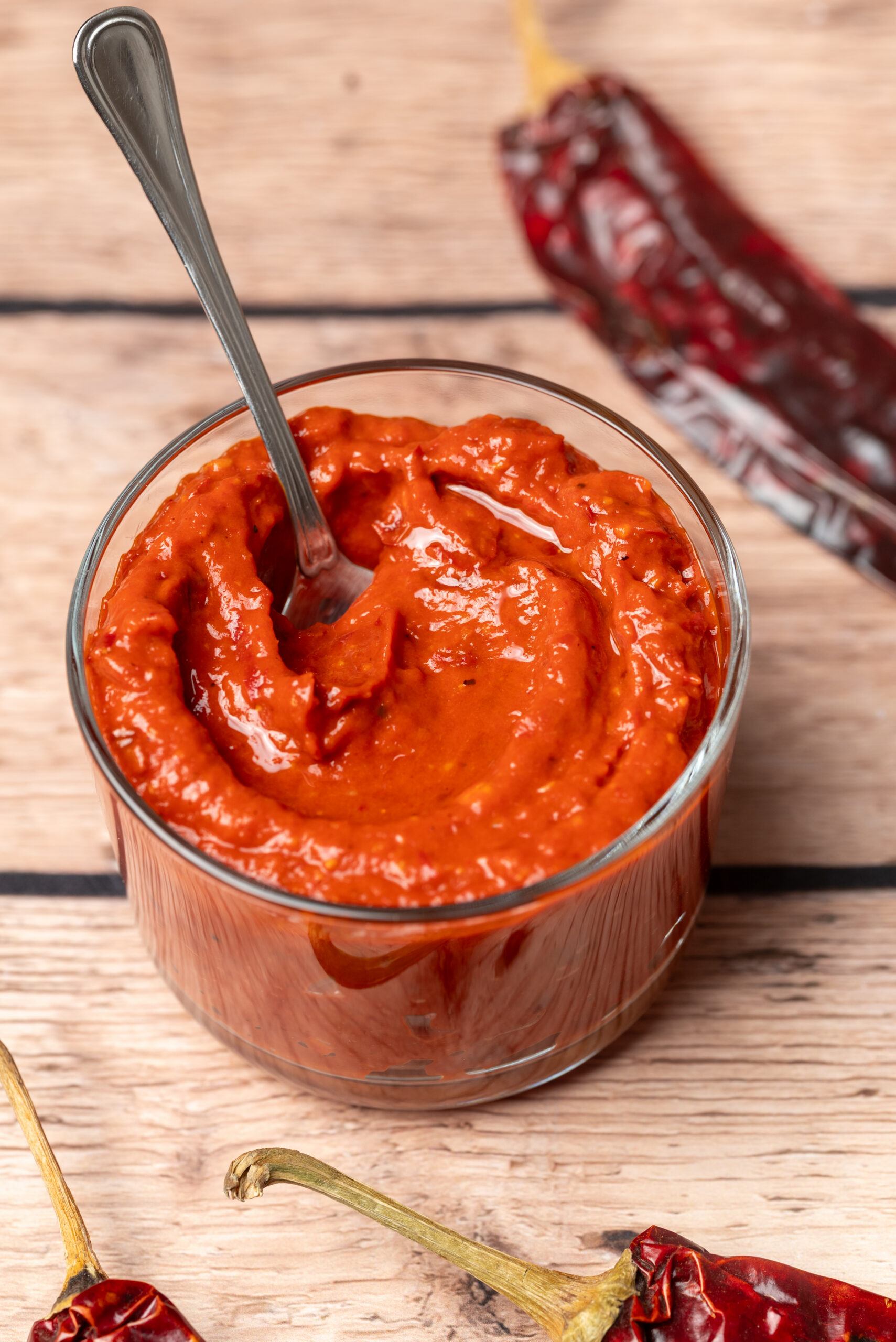
- With the processor running, slowly drizzle in the olive oil until you reach a smooth, thick paste. Taste and adjust seasonings if needed. Spoon the paste into a jar and top with a thin layer of extra olive oil. Refrigerate to let flavors deepen.

Leave a Comment