

Discover how easy it is to make a spicy, classic Italian pasta dish with this Pasta all’Amatriciana recipe.
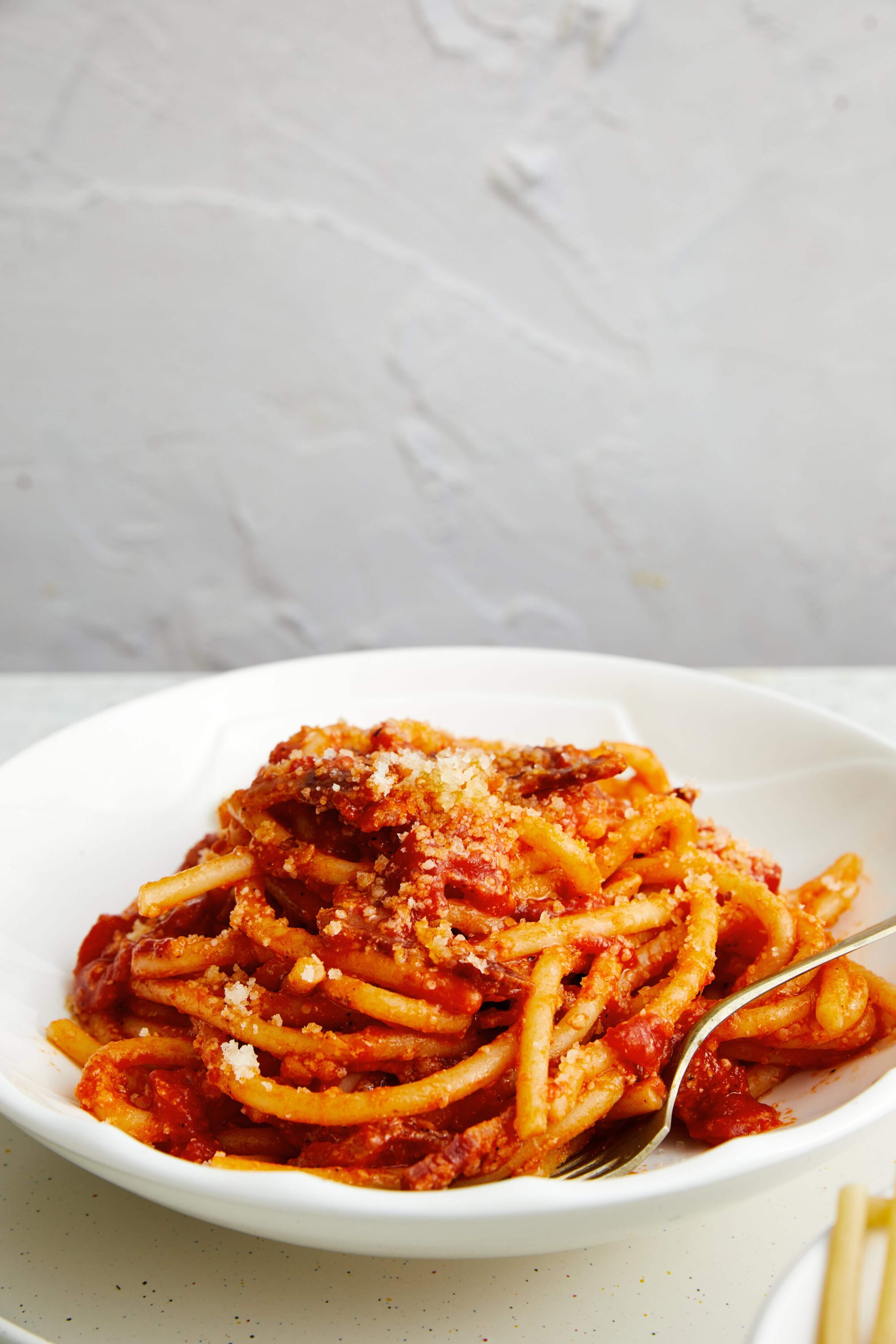
I recently shared a dish called Pasta alla Gricia, which also uses guanciale and pecorino romano. This Pasta all’Amatriciana Recipe, originating in the town of Amatrice, is believed to be inspired by that dish. Tomatoes were introduced to Europe by the Spanish in the 1500s. Although tomatoes were first introduced hundreds of years before the creation of this recipe, it wasn’t until the late 18th and 19th centuries that they were widely used in pasta dishes like this and in Italian cuisine.
When you take the simple yet delicious Pasta alla Gricia and add hand-crushed whole tomatoes in their juice to the skillet, you get a meal bursting with layers of undeniable flavor. With so many classic pasta dishes, you could take many trips to your favorite Italian restaurant to try them all. Or you could make them at home for a fraction of the cost and determine your favorite.
What Makes This Dish a Standout?
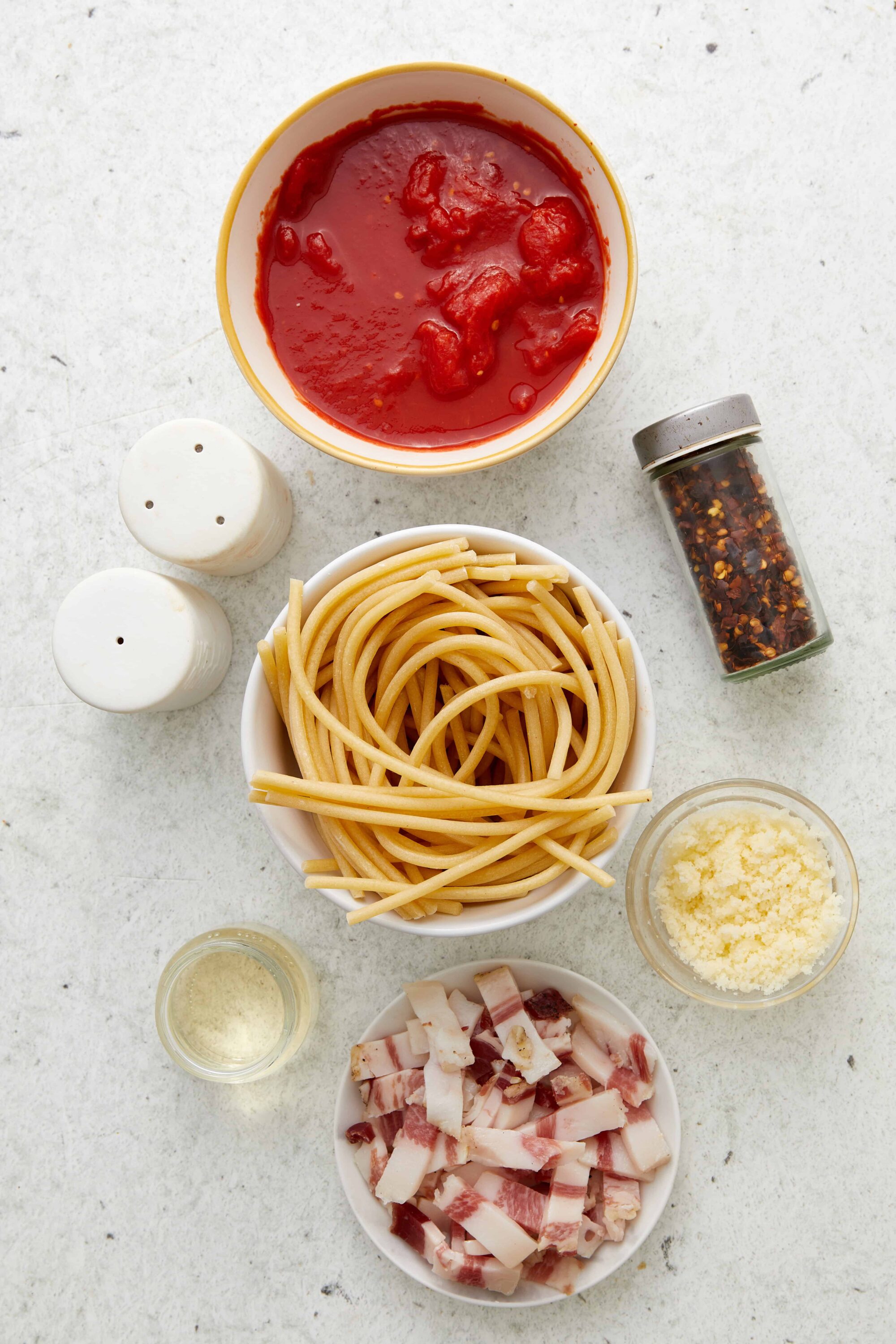
Pasta all’Amatriciana balances the perfect amount of heat with the savory richness of golden-fried guanciale. For those who don’t know, guanciale is salt-cured pork jowl coming from the cheek of the animal. It is a fatty cut of pork that flavors the sauce. You use crispy meat and the rendered fat to flavor this dish. Using pecorino Romano from sheep’s milk instead of Parmigiano Reggiano is crucial in this recipe, as it brings a tangy, grassy flavor that is very different from Parmigiano cheese. Buy your cheese in a block and grate it by hand to eliminate additives that will keep it from melting into the sauce.
What Is Bucatini Pasta?
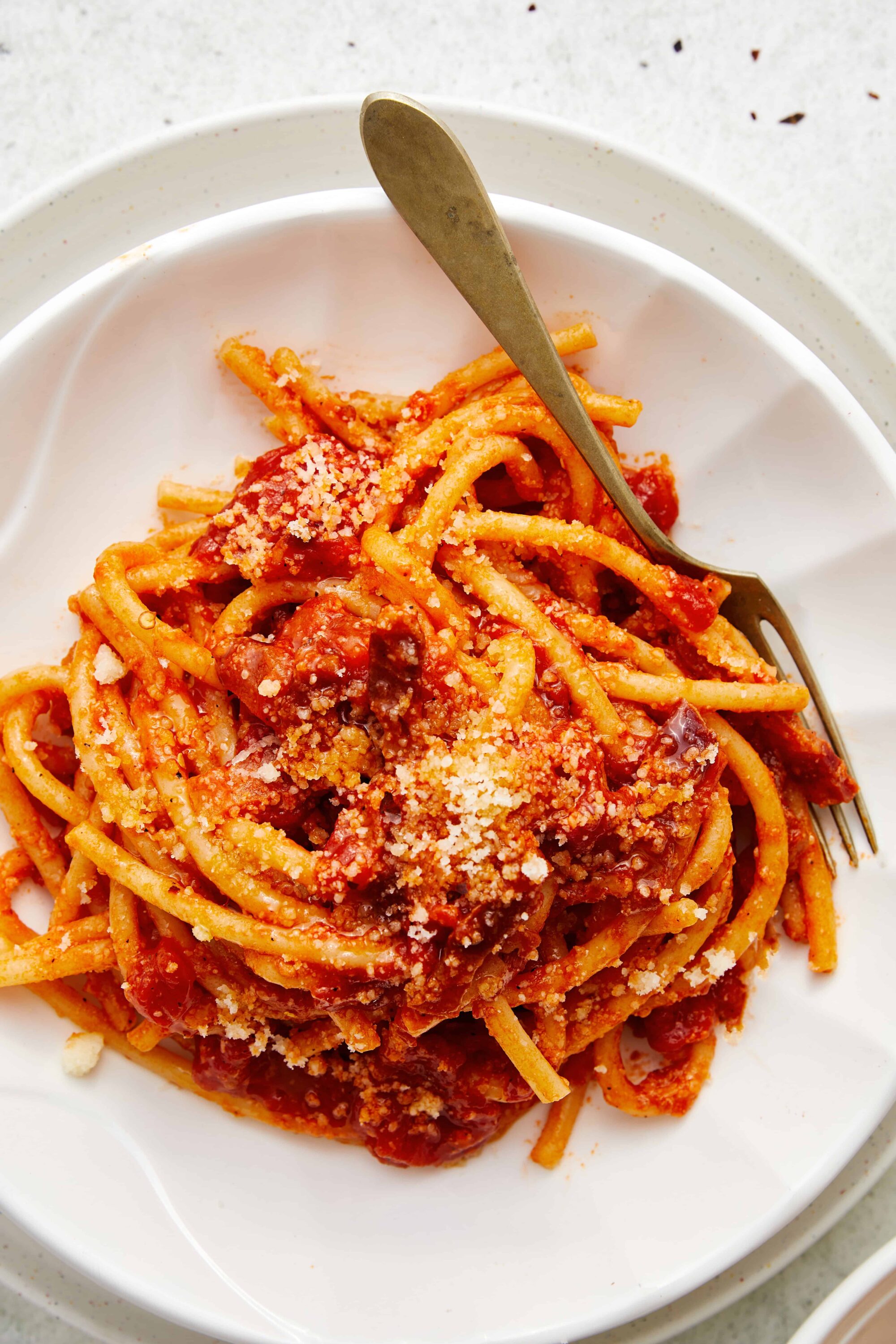
At first glance, bucatini looks like spaghetti. The difference is the hole that runs through the center of the pasta. In Italian, “buco” means “hole.” You can also use this pasta shape for traditional carbonara recipes. Why should you use bucatini pasta if you can find it? Unlike spaghetti, which features strands of pasta covered in sauce, bucatini pasta, which is a bit thicker due to the center hole, fills with the sauce. Until you’ve tried bucatini, you have no idea what you’re missing. You may never go back to spaghetti again. Of course, if you can’t find bucatini pasta, use spaghetti or rigatoni, the latter of which you may also find used in restaurants in Rome for this dish.
How to Make Ahead and Store
The sauce can be made in advance and stored separately until ready to make the pasta. Reheat the sauce in a large skillet as you will add the freshly-drained pasta directly to the pan.
Serving Suggestions
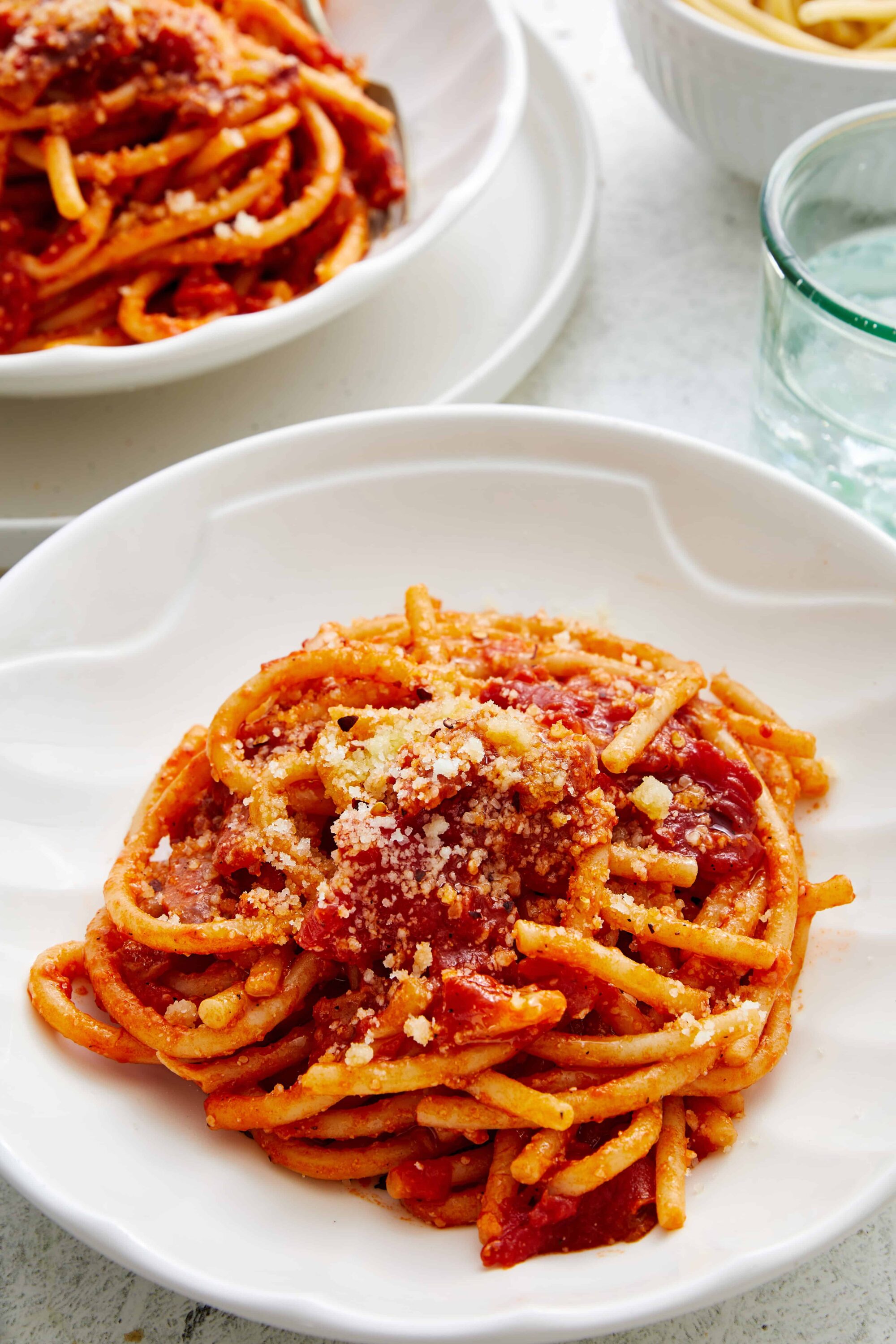
I love serving spicy pasta dishes like all’Amatriciana with a Traditional Caprese Salad. The coolness of the tomato and cheese slices helps tone down the heat from the crushed red peppers in the sauce. A side of Oven-Baked Asparagus with Garlic & Parmesan goes beautifully with this dish. Finish your meal with a platter of Pignoli Cookies and enjoy your at-home visit to Italy.
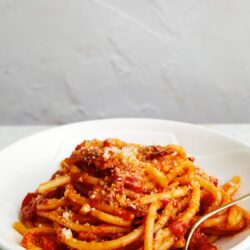
Pasta all’Amatriciana Recipe

Ingredients
- 1 pound bucatini pasta
- 6 ounces guanciale sliced into strips
- 1/4 cup dry white wine
- 28 ounces whole peeled tomatoes hand-crushed
- 1 teaspoon red pepper flakes
- Salt to taste
- Freshly ground black pepper to taste
- 1 cup grated Pecorino Romano cheese
Instructions
- Bring a large pot of salted water to a boil for the pasta.
- In a skillet, cook the guanciale over medium heat until crispy, about 5-7 minutes. Remove guanciale and set aside.
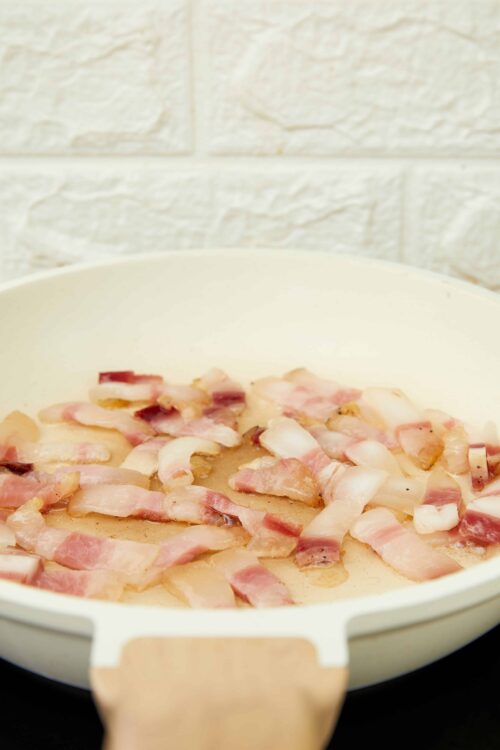
- Deglaze the skillet with white wine, scraping up any browned bits.
- Add the hand-crushed tomatoes and red pepper flakes to the skillet. Season with salt and pepper. Simmer the sauce for about 15 minutes.
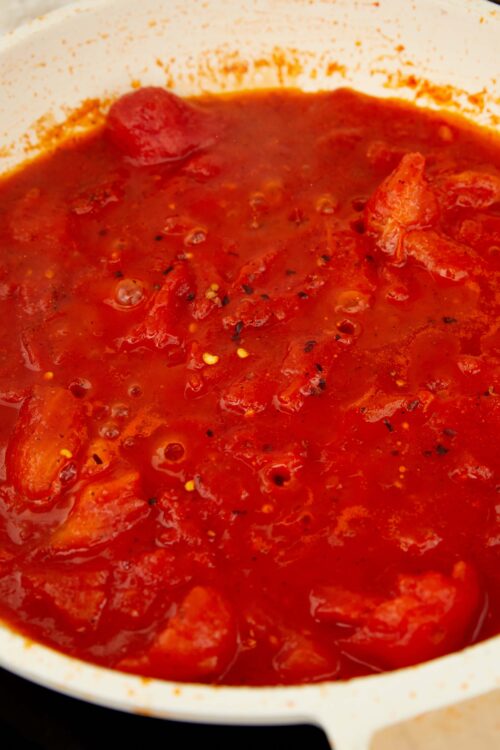
- While the sauce simmers, cook the bucatini in the boiling water until al dente, about 8 minutes.
- Drain the pasta, reserving 1/4 cup of the pasta water. Add the pasta and reserved water to the tomato sauce. Stir in the crispy guanciale.
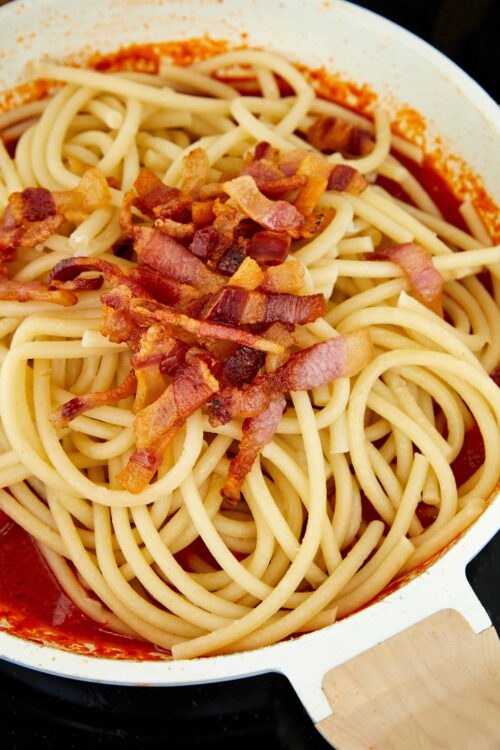
- Remove from heat and stir in the Pecorino Romano cheese until the sauce becomes creamy.
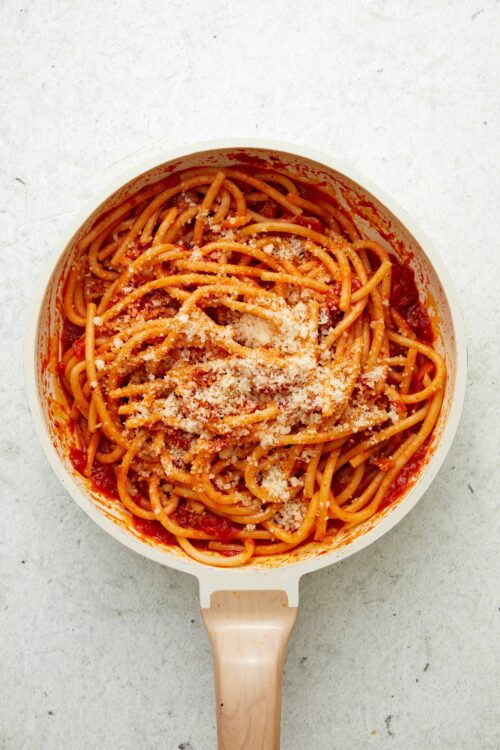
- Serve immediately, topped with additional cheese if desired.

Leave a Comment