

When you want perfectly tender, delicious fish, treat yourself and your family to Poached Salmon.
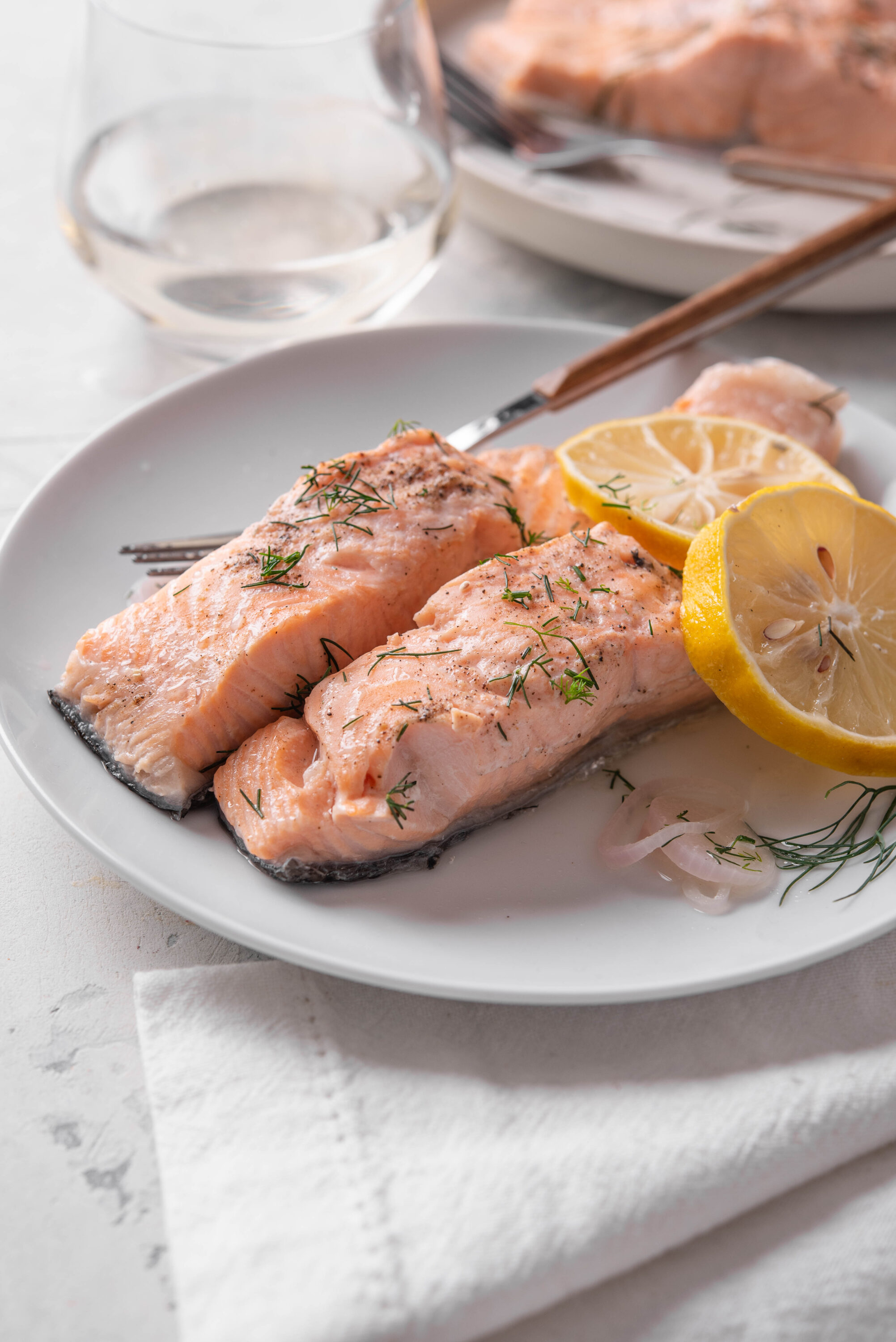
The most popular fish (not shellfish) to enjoy in the US seems to be salmon. It’s not surprising that home cooks are always looking for new and exciting recipes. A recipe that comes up frequently in searches is Poached Salmon. Now, I will admit I’ve only made it a couple of times because I thought it would be a challenge to poach it right. That changed recently when I decided to try making salmon a few different ways.
Poaching is no more time-consuming than any other method, and the fish comes out perfectly pink, moist, and flavorful. The choice of poaching liquid can make a tremendous difference in the taste of your fish. Since I also decided to use my leftover salmon in various other recipes, I got first-hand insight into what I liked best. Please keep reading to learn my verdict.
What Is the Best Cooking Method for Salmon?
The answer here might surprise you—they are all GREAT! Poaching, broiling, baking, air frying, sautéing, pan-searing, grilling, and steaming all produce delicious fish. The question to ask yourself is this: What do you want to do with the fish? I have a dual focus when making salmon—how I want to enjoy the first meal and how I want to use leftovers the next day or two.
Poached salmon is an elegant dish that takes less time than many other cooking methods and yields a fish that is light and flaky—no crust. If I am serving an Asian-style meal, I typically pan-sear, sauté, air fry, bake, or broil my fish with a teriyaki glaze for that caramelized top. When I want to use leftovers for patties, such as replacing the tuna with salmon in these Tuna Patties, then broiling, baking, and poaching provides unique yet delicious results. No matter how you choose to prepare your salmon, you will find it provides an unbeatable taste. Poached salmon is also an excellent replacement for canned fish in this recipe for Salmon Salad.
Wine or No Wine – How to Poach the Best Salmon
To wine or not to wine, that is the question. I can simplify the answer by telling you that you won’t whine, no matter what liquid you choose for poaching. A light white wine adds a savory freshness you won’t get from water or broth. However, a light chicken or vegetable broth brings earthy flavors. If you can get seafood stock, it brings more fish flavor to the dish.
You can also use a combination of water and wine or broth and wine. If you don’t use wine, add a splash of vinegar to the liquid to give the fish a hint of acidity. Pinot Grigio, Chardonnay, and Sauvignon Blanc are the best wines for poaching salmon. There is no right or wrong—only a delicious meal, no matter what you choose.
How to Make Ahead and Store
You can poach your salmon beforehand, letting it cool to room temperature before wrapping and storing it in the refrigerator for up to 3 days. However, poached salmon is best when served the same day as it is made. You can store it with or without the poaching liquid, depending on how you want to serve it. Freezing for up to 3 months well-wrapped and in a freezer-safe container is possible, but it will change the texture and taste of the fish.
Serving Suggestions
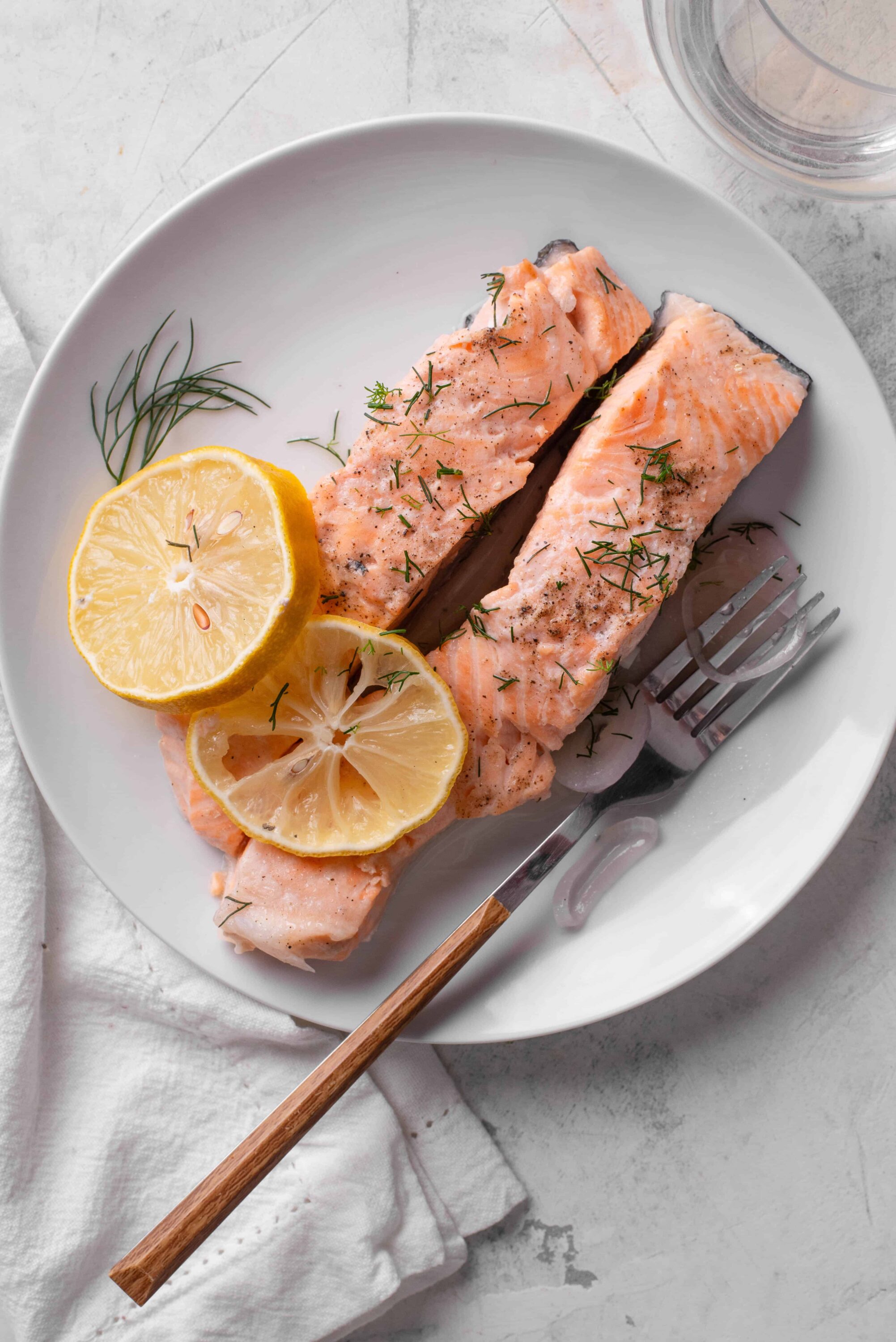
Serving salmon with a side like Roasted Asparagus and Potatoes is perfect because you get your starch and vegetables all in one healthy dish. The rosemary complements the delicate flavor of the salmon. Oven-Roasted Ratatouille is another excellent option for a healthy and tasty salmon meal. Make some tartar, dill, or Hollandaise sauce to go with your fish, and sit back and let the accolades flow.
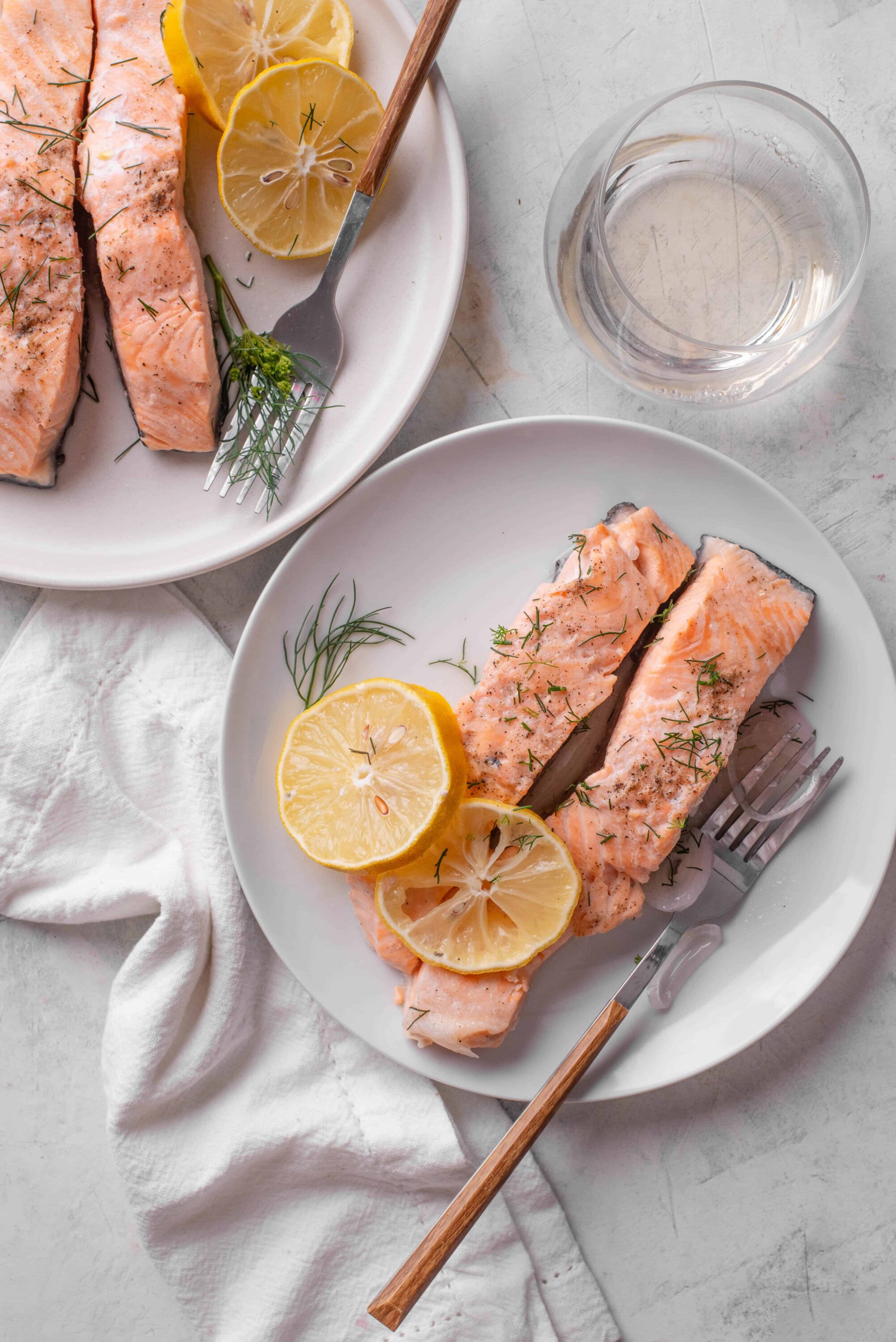
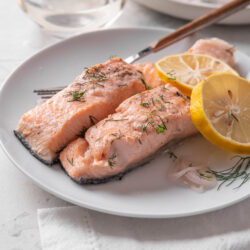
Poached Salmon

Ingredients
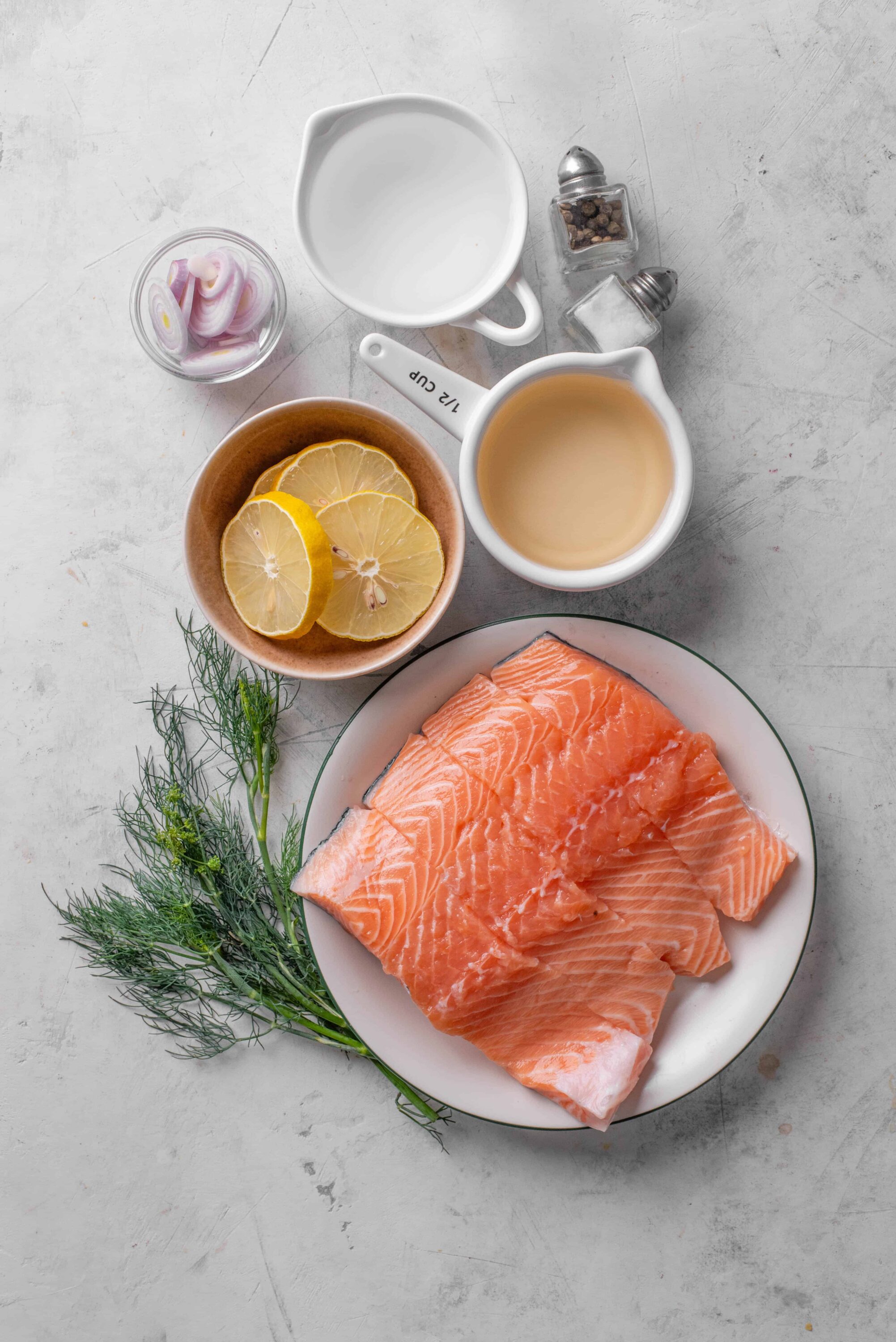
- 1/2 cup dry white wine
- 1/2 cup water
- 1 lemon sliced
- 1 small shallot thinly sliced
- 4 sprigs fresh dill
- 4 6-ounce salmon fillets, skin on
- Kosher salt to taste
- Freshly ground black pepper to taste
Instructions
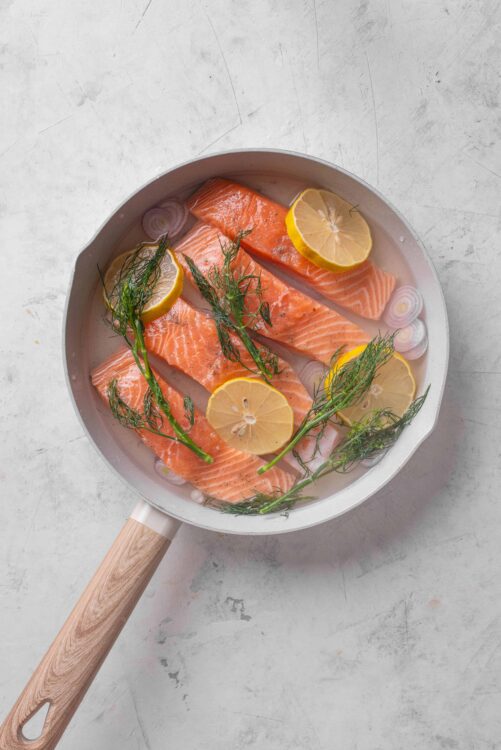
- In a large skillet, combine white wine, water, lemon slices, shallot, and 2 sprigs of dill. Bring to a simmer over medium heat.
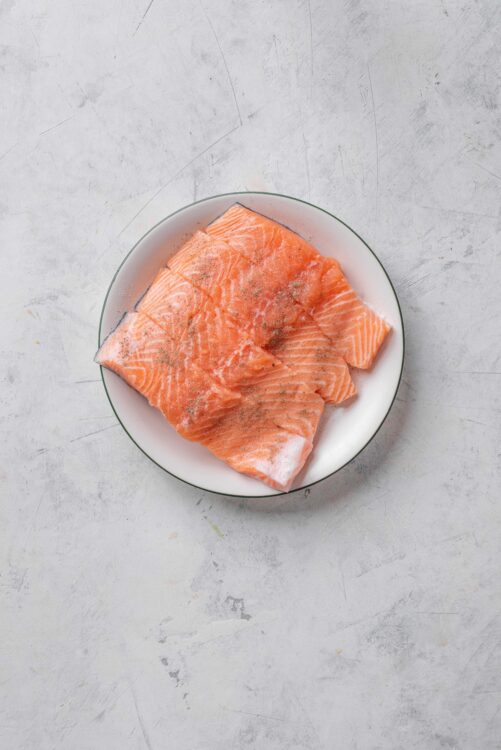
- Season the salmon fillets with kosher salt and black pepper. Place them in the skillet, skin side down.
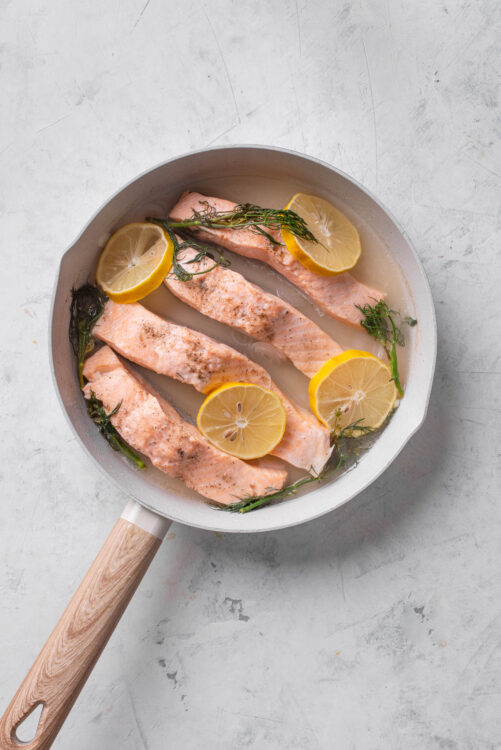
- Cover the skillet with a lid and let the salmon poach gently for about 6-8 minutes, or until the salmon is cooked through and flakes easily with a fork.
- Carefully remove the salmon from the skillet and place on serving plates. Garnish with the remaining fresh dill sprigs.
- Serve the poached salmon warm, optionally with a side of steamed vegetables or a light salad.

Leave a Comment